Fixed vs Variable Displacement Motors: Performance Comparison in Hydraulic Systems
Fixed vs Variable Displacement Hydraulic Motors are two of the most commonly used components in hydraulic systems. Choosing between these motor types can significantly affect system efficiency, torque output, speed control, and overall operating costs. In this guide, we compare fixed vs variable displacement hydraulic motors, their performance characteristics, advantages, disadvantages, and ideal applications.When selecting Fixed vs Variable Displacement Hydraulic Motors, engineers must consider application requirements and operating conditions.Fixed vs Variable Displacement Hydraulic Motors differ significantly in terms of speed control, efficiency, and torque output.
The choice between these two types directly affects efficiency, control, energy consumption, and system performance. This article provides a detailed, accuracy-focused comparison.
1. Fundamentals of Hydraulic Motor Displacement
What is Displacement?
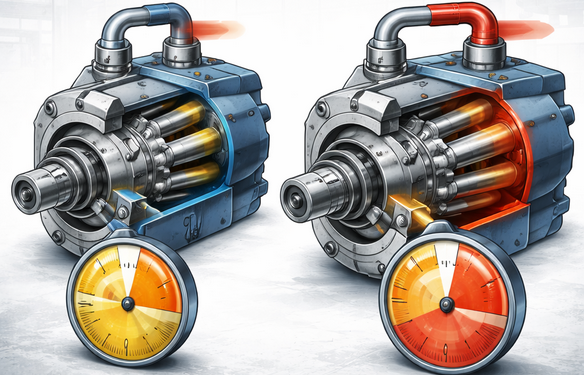
Displacement refers to the volume of fluid required to rotate the motor shaft by one revolution, typically expressed in cc/rev.
- Higher displacement → Higher torque, lower speed
- Lower displacement → Lower torque, higher speed
This relationship is foundational to understanding performance different
Limitations
- No flexibility in speed/torque adjustment
- Energy inefficiency under variable load
- Requires external control systems (valves)
2. Fixed Displacement Motors
Definition
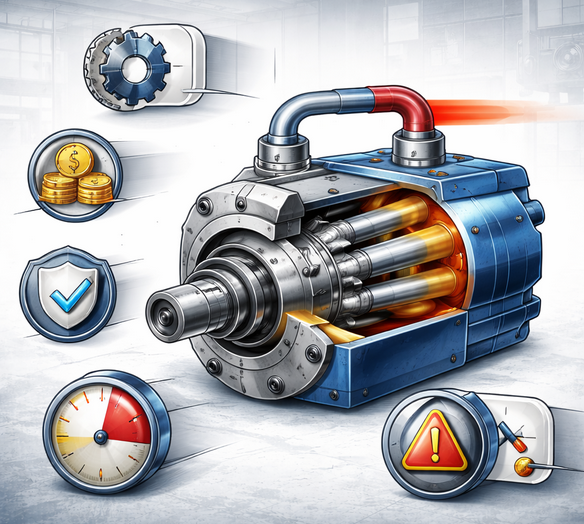
A fixed displacement motor has a constant internal geometry, meaning the fluid volume per revolution does not change.
Key Characteristics
- Constant displacement value
- Speed depends solely on flow rate
- Torque depends on system pressure
Working Principle
Fluid enters the motor, acts on pistons or gears, and produces rotation. Since displacement is fixed, output is predictable and linear.
Advantages
- Simple design
- Lower initial cost
- High reliability
- Minimal control complexity
Limitations
- No flexibility in speed/torque adjustment
- Energy inefficiency under variable load
3. Variable Displacement Motors
Definition
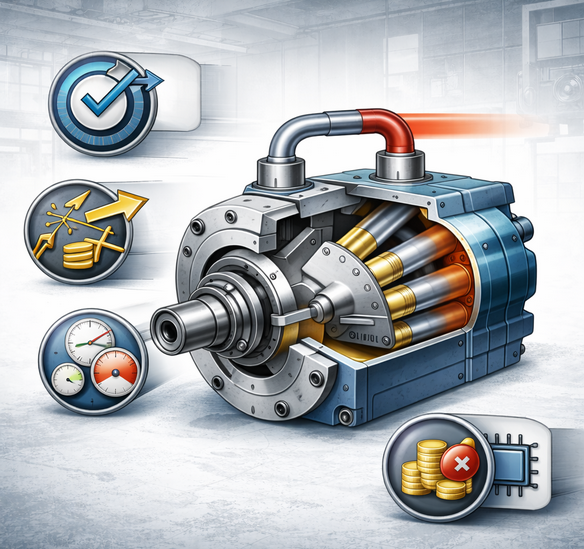
A variable displacement motor can change its internal geometry, altering the fluid volume per revolution.
Key Characteristics
- Adjustable displacement
- Variable speed and torque output
- Often uses swash plate or bent-axis mechanism
Working Principle
The motor adjusts piston stroke length (via swash plate angle or similar mechanism), allowing dynamic control of displacement.
Advantages
- High efficiency under varying loads
- Precise speed and torque control
- Reduced energy consumption
- Better system optimization
Limitations
- Higher cost
- More complex design
- Requires control systems
4. Core Performance Comparison
4.1 Speed Control
| Parameter | Fixed Displacement | Variable Displacement |
|---|---|---|
| Speed Adjustment | Indirect (via flow control valves) | Direct (by changing displacement) |
| Efficiency | Lower | Higher |
| Control Precision | Limited | High |
Conclusion: Variable motors provide superior speed control without energy loss through throttling.
4.2 Torque Output
| Parameter | Fixed Displacement | Variable Displacement |
|---|---|---|
| Torque Variation | Pressure-dependent only | Pressure + displacement adjustable |
| Flexibility | Low |
4.2 Torque Output
| Parameter | Fixed Displacement | Variable Displacement |
|---|---|---|
| Torque Variation | Pressure-dependent only | Pressure + displacement adjustable |
| Flexibility | Low | High |
Conclusion: Variable motors allow torque optimization for different load conditions.
4.3 Energy Efficiency
Fixed displacement systems often waste energy through:
- Throttling losses
- Heat generation
4.4 System Complexity
| Aspect | Fixed Motor | Variable Motor |
|---|---|---|
| Design | Simple | Complex |
| Maintenance | Easier | More demanding |
| Control Requirement | External valves | Integrated control |
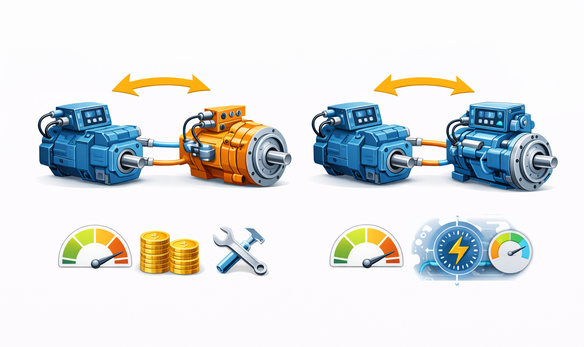
4.5 Cost Analysis
| Cost Type | Fixed | Variable |
|---|---|---|
| Initial Cost | Low | High |
| Operating Cost | Higher (energy loss) | Lower (efficient operation) |
| Lifecycle Cost | Moderate | Optimized |

5. Application-Based Comparison
Fixed Displacement Motor Applications
- Conveyors
- Mixers
- Constant-speed industrial machines
- Simple hydraulic systems
Variable Displacement Motor Applications
- Construction equipment (excavators, loaders)
- Hydrostatic drives
- Mobile machinery
- Precision industrial systems
Observation:
Variable motors dominate in dynamic and load-variable environments.
6. Efficiency Analysis (Technical Perspective)
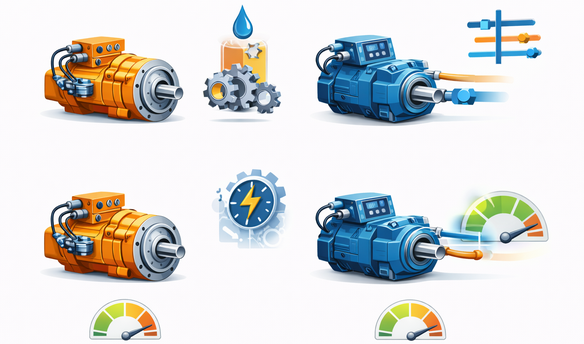
Volumetric Efficiency
- Fixed motors: Slight leakage losses
- Variable motors: Optimized through design adjustments
Mechanical Efficiency
- Fixed motors: Consistent
- Variable motors: High but varies with displacement setting
Overall Efficiency
- Fixed: Lower under varying loads
- Variable: High across operating range
7. Role in Hydrostatic Transmission Systems
Hydrostatic drives commonly combine:
- Variable displacement pump
- Variable or fixed displacement motor
Configurations
- Variable Pump + Fixed Motor
- Moderate control
- Lower cost
- Variable Pump + Variable Motor
- Maximum efficiency
- Full control over speed and torque
This configuration is widely used in Rexroth systems.
8. Control Strategies
Fixed Displacement Systems
- Flow control valves
- Pressure control valves
- Mechanical throttling
Variable Displacement Systems
- Electro-hydraulic control
- Load sensing systems
- Proportional control
Key Insight:
Variable motors reduce reliance on external valves, improving system efficiency.
9. Maintenance and Reliability
Fixed Motors
- Fewer moving parts
- Easier maintenance
- Longer service intervals
Variable Motors
- More components (swash plate, control units)
- Requires skilled maintenance
- Sensitive to contamination
Critical Factor:
Fluid cleanliness is essential for both, but especially for variable motors.
10. Design Considerations for Selection
When choosing between the two, engineers evaluate:
- Load variability
- Required control precision
- Energy efficiency targets
- Budget constraints
- System complexity tolerance
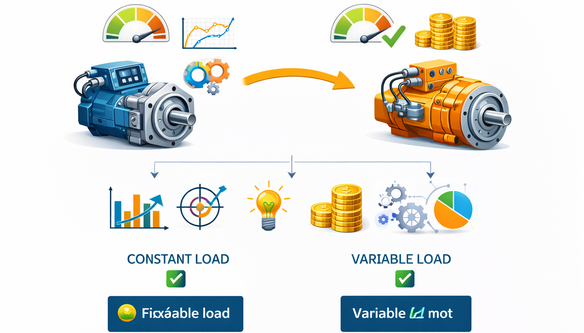
Selection Rule (Validated)
- Constant load → Fixed displacement motor
- Variable load → Variable displacement motor
11. Common Misconceptions (Elimination Check)
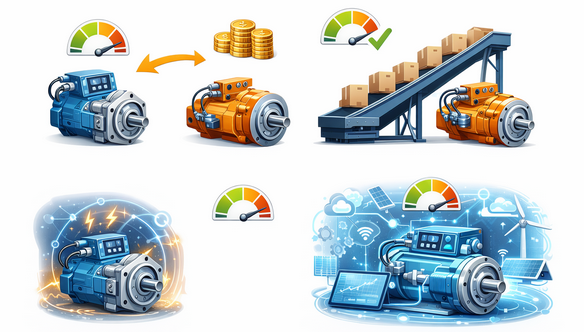
- “Variable motors always replace fixed motors” → Incorrect (cost and simplicity still favor fixed in many cases)
- “Fixed motors are inefficient in all cases” → Incorrect (efficient in constant-load systems)
- “Variable motors eliminate all energy loss” → Incorrect (losses still exist but reduced)
12. Future Trends in Hydraulic Motor Technology
- Smart electro-hydraulic integration
- IoT-based performance monitoring
- Energy-efficient hybrid systems
- Advanced materials for reduced wear
Manufacturers like Bosch Rexroth AG continue to innovate in these areas.
Conclusion
Fixed and variable displacement motors serve distinct roles in hydraulic systems. Fixed motors offer simplicity, reliability, and cost-effectiveness, while variable motors provide superior control, efficiency, and adaptability.
The optimal choice depends on system requirements:
- For stable, predictable operations → Fixed displacement
- For dynamic, high-performance systems → Variable displacement
A correct selection ensures maximum efficiency, safety, and long-term system reliability.Understanding Fixed vs Variable Displacement Hydraulic Motors helps businesses choose the most efficient hydraulic solution for their systems.