Complete Guide to Eaton Corporation Hydraulic Valves: Types, Working, and Applications
Introduction
Hydraulic valves are critical control elements in fluid power systems. They regulate flow, pressure, and direction of hydraulic fluid, enabling machines to perform controlled mechanical work. eaton-pump-supplier Among global manufacturers, Eaton hydraulic valves are widely used due to their precision, durability, and compatibility with high-pressure systems./rexroth-pump-supplier
This guide provides a complete technical overview of Eaton hydraulic valves, including their types, working principles, performance characteristics, and industrial applications.
What Are Hydraulic Valves?
Hydraulic valves are devices that:
- Control the direction of fluid flow
- Regulate pressure levels
- Adjust flow rate
They act as the decision-making components in hydraulic circuits, determining how actuators such as cylinders and motors operate.
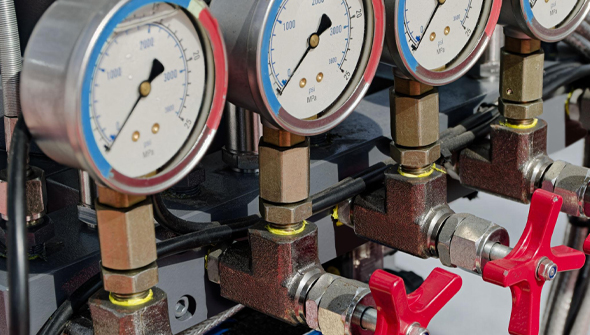
Core Functions of Eaton Hydraulic Valves
Eaton valves are engineered to perform three primary functions:
1. Direction Control
- Start, stop, or change fluid flow direction
- Enable forward and reverse motion
2. Pressure Control
- Maintain safe operating pressure
- Prevent system overload
3. Flow Control
- Regulate speed of actuators
- Ensure consistent operation
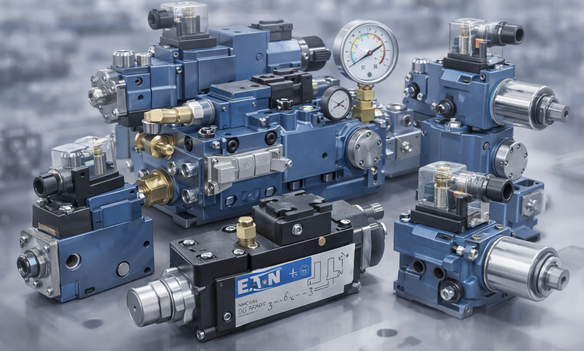
Types of Eaton Hydraulic Valves
1. Directional Control Valves (DCVs)
Definition
Valves that control the path of hydraulic fluid within the system.
Key Types
- 2-way valves
- 3-way valves
- 4-way valves
Operation
- Use a spool mechanism to open/close flow paths
- Can be actuated by:
- Manual control
- Solenoids (electrical)
- Hydraulic pilot pressure
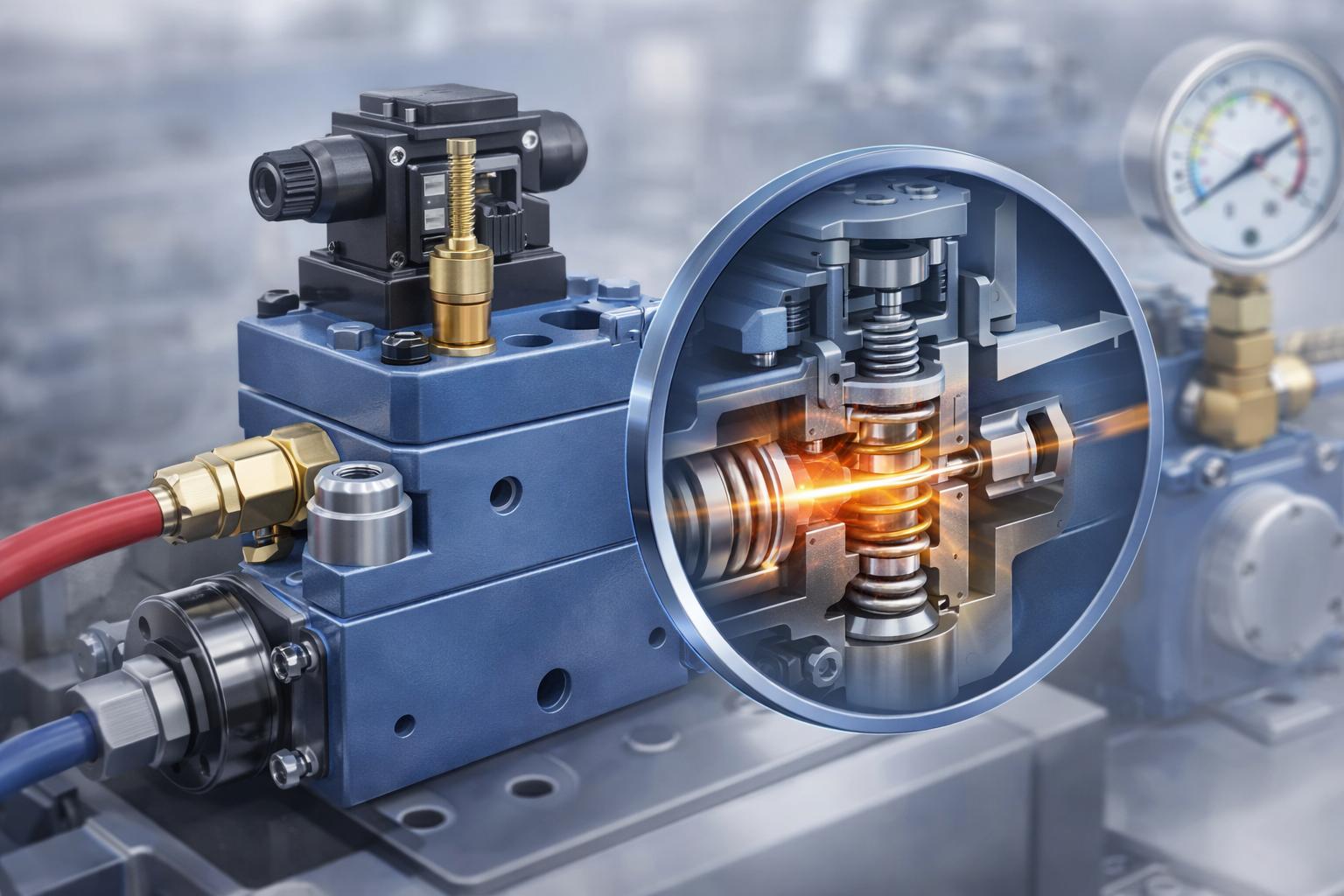
2. Pressure Control Valves
Definition
Valves that regulate or limit system pressure.
Key Types
a. Pressure Relief Valve
- Protects system from excessive pressure
- Opens when pressure exceeds set limit
b. Pressure Reducing Valve
- Maintains lower pressure in specific circuit sections
c. Sequence Valve
- Ensures operations occur in a specific order
3. Flow Control Valves
Definition
Valves that regulate the flow rate of hydraulic fluid.
Key Types
- Needle valves
- Flow regulators
- Flow dividers
Function
- Controls actuator speed
- Maintains consistent performance
4. Cartridge Valves
Definition
Compact valves designed to fit into manifold blocks.
Features
- Space-saving design
- Modular configuration
- Easy maintenance
Applications
- High-density hydraulic systems
- Industrial automation
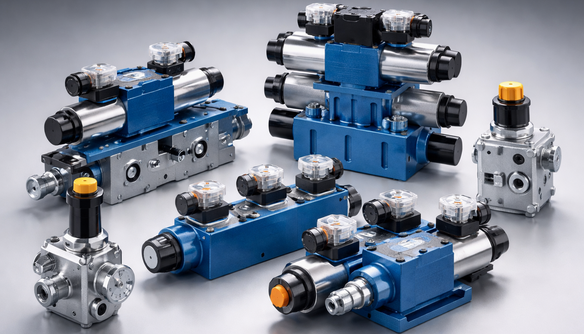
5. Proportional and Servo Valves
Definition
Advanced valves for precise control of flow and pressure.
Features
- Electrically controlled
- Continuous (not just on/off) operation
- High accuracy
Use Cases
- CNC machines
- Robotics
- Automated production systems
Material Handling Systems
- Conveyors
- Lifting equipment
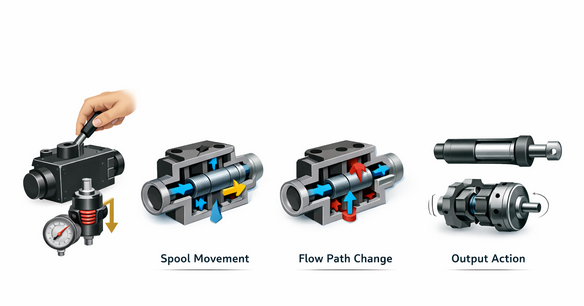
Working Principle of Hydraulic Valves
Hydraulic valves operate by modifying internal flow passages using mechanical or electrical inputs.
Step-by-Step Process
- Input Signal
- Manual lever, solenoid, or pressure signal activates the valve
- Spool Movement
- Internal spool shifts position
- Flow Path Change
- Fluid is redirected or restricted
- Output Action
- Cylinder or motor responds accordingly
Key Performance Factors
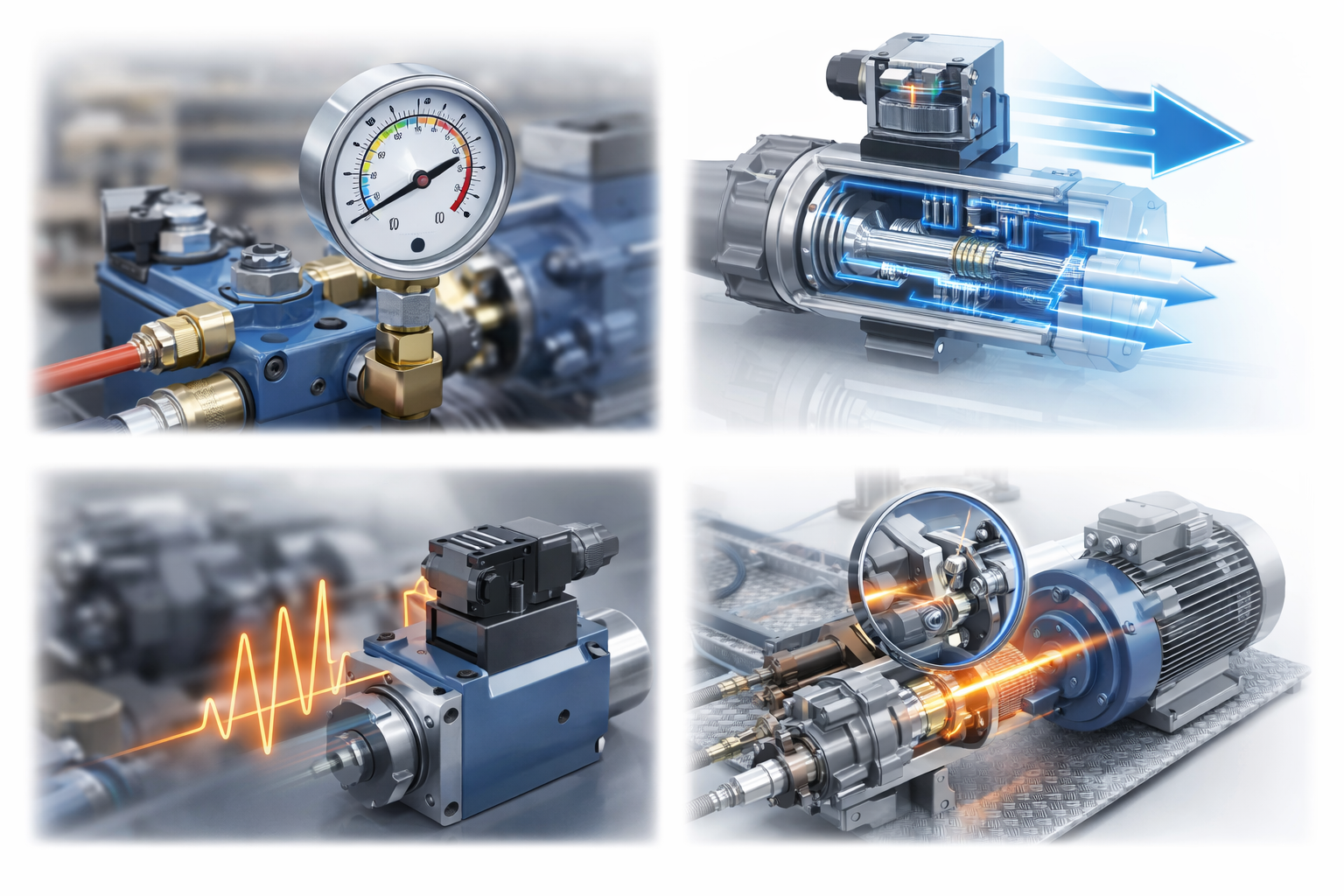
1. Pressure Rating
Typical Eaton valve capabilities:
- High-pressure operation (commonly up to 350+ bar)
- Designed for heavy-duty applications
2. Flow Capacity
- Determines how much fluid passes through the valve
- Directly impacts system speed
3. Response Time
- Time taken to react to input signals
- Critical in automation systems
4. Leakage Control
- Internal leakage minimized through precision engineering
- Ensures efficiency and reliability
Applications of Eaton Hydraulic Valves
1. Construction Equipment
- Excavators
- Loaders
- Cranes
✔ Function: Control heavy loads and directional movement
2. Agricultural Machinery
- Tractors
- Harvesters
✔ Function: Regulate speed and pressure for field operations
3. Mining Equipment
- Drilling rigs
- Conveyors
✔ Function: Handle high-pressure, high-load conditions
4. Industrial Automation
- CNC machines
- Robotic systems
✔ Function: Enable precise motion control
5. Material Handling Systems
- Conveyors
- Lifting equipment
✔ Function: Smooth and controlled movement
Advantages of Eaton Hydraulic Valves
✔ High Reliability
- Designed for continuous industrial use
✔ Precision Control
- Accurate regulation of flow and pressure
✔ Compact Design
- Suitable for modern, space-limited systems
✔ Versatility
- Available for multiple applications and system types
✔ Long Service Life
- Durable materials and construction
Limitations
✖ Initial Cost
- Higher than low-end alternatives
✖ Maintenance Requirement
- Requires clean fluid and periodic inspection
✖ Complexity (Advanced Valves)
- Proportional/servo valves require skilled setup
Selection Criteria
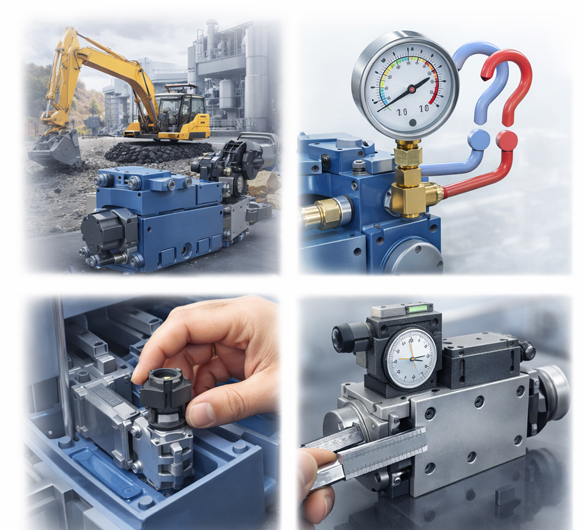
When selecting Eaton hydraulic valves, consider:
1. Application Type
- Industrial vs mobile systems
2. Pressure Requirements
- Ensure compatibility with system pressure
3. Flow Rate
- Match valve capacity with system demand
4. Control Type
- Manual, electrical, or hydraulic
5. Space Constraints
- Cartridge valves for compact designs
-
Installation Best Practices
- Ensure proper alignment and mounting
- Use clean hydraulic fluid
- Avoid contamination
- Follow manufacturer specifications
Maintenance Guidelines
Routine Checks
- Inspect for leaks
- Monitor pressure levels
- Check response time
Preventive Maintenance
- Replace filters regularly
- Clean hydraulic system
- Inspect seals and components
Common Problems and Troubleshooting
| Problem | Cause | Solution |
|---|---|---|
| Pressure drop | Leakage or blockage | Inspect seals and lines |
| Slow response | Contamination | Clean system |
| Overheating | Excess flow restriction | Check valve settings |
| Noise | Air in system | Bleed hydraulic lines |
Conclusion
Eaton hydraulic valves play a critical role in ensuring efficient, safe, and precise operation of hydraulic systems. With a wide range of valve types—including directional, pressure, flow, cartridge, and proportional valves—they provide solutions for diverse industrial and mobile applications.
Final Technical Summary
- Control: Direction, pressure, and flow
- Performance: High-pressure capability and efficiency
- Applications: Construction, agriculture, mining, automation
- Strength: Reliability, precision, durability
Eaton valves remain a preferred choice for high-performance hydraulic systems due to their engineering quality and adaptability.