
Complete Guide to Rexroth A6VM Hydraulic Motor: Working, Features, and Applications
Hydraulic drive systems depend on precise, high-efficiency components to convert fluid power into mechanical output. Among the most widely used solutions are Rexroth Hydromatik Motors A6VM vs A2FM, which have become industry standards in mobile and industrial hydraulics due to their durability, efficiency, and high power density.eaton-pump-supplier
Rexroth Hydromatik Motors hydraulic applications mein kaafi popular hain. Is guide mein hum Rexroth Hydromatik Motors ke A6VM aur A2FM models compare karenge. This comprehensive guide to Rexroth Hydromatik Motors A6VM vs A2FM provides a structured and technically accurate comparison of the A6VM (variable displacement) and A2FM (fixed displacement) series. It covers their design, working principles, specifications, performance characteristics, applications, and key selection criteria to help engineers and hydraulic professionals choose the right motor for their requirements.
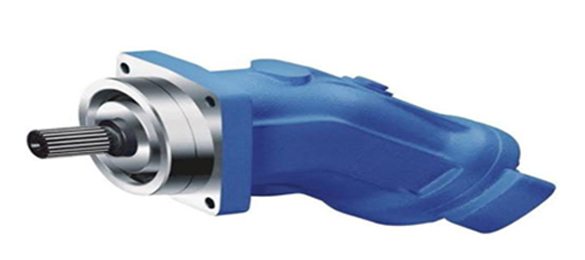
1. Overview of Rexroth Hydromatik Motors
Hydromatik motors are axial piston motors with bent-axis design, optimized for high-pressure applications. These motors operate on the principle of converting hydraulic energy into rotational motion through piston movement inside a rotating cylinder block.
Key Characteristics
- High efficiency (mechanical + volumetric)
- Compact size with high power output
- Wide operating pressure range (up to ~450 bar typical)
- Suitable for both open and closed circuit systems
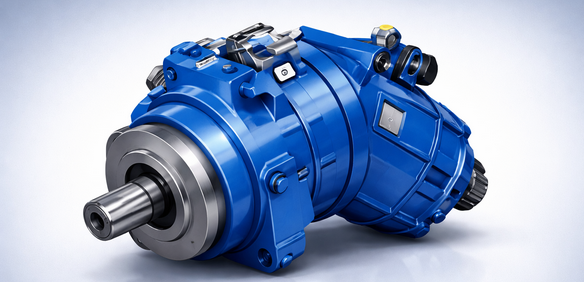
2. Rexroth A6VM Motor (Variable Displacement)Definition
The A6VM is a variable displacement bent-axis axial piston motor, meaning its output speed and torque can be adjusted by changing displacement.
Core Features
- Variable displacement (adjustable cc/rev)
- High starting torque efficiency
- Wide control range (often 0 → max displacement)
- Integrated control options (hydraulic, electric)
Working Principle
Displacement is varied by adjusting the angle of the piston group relative to the drive shaft. This changes the volume of fluid required per revolution, directly controlling speed and torque.
Advantages
- Flexible speed control without external gearboxes
- Energy efficient under varying load conditions
- Ideal for hydrostatic transmissions
Limitations
- Higher cost than fixed motors
- More complex control system
- Requires precise tuning
Typical Applications
- Construction machinery (excavators, loaders)
- Drilling rigs
- Mobile hydraulic drives
- Mining equipment
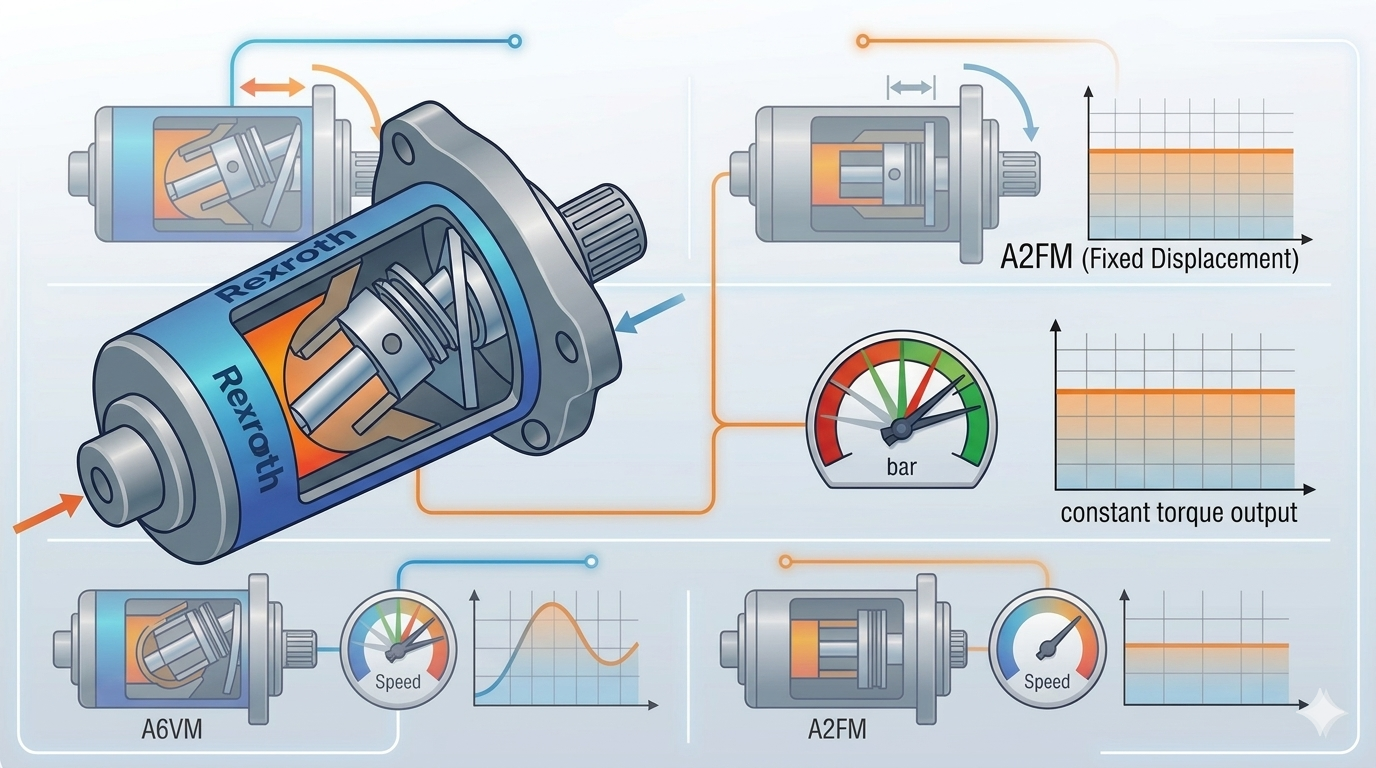
3. Rexroth A2FM Motor (Fixed Displacement)
Definition
The A2FM is a fixed displacement axial piston motor, meaning it delivers a constant displacement per revolution.
Core Features
- Fixed displacement design
- Compact and robust construction
- High reliability with minimal control complexity
- Suitable for high-speed operations
Working Principle
The motor operates with a constant piston angle, ensuring a fixed volume of hydraulic fluid is converted into rotational motion each cycle.
Advantages
- Simple design → lower maintenance
- Cost-effective solution
- High reliability in continuous operations
Limitations
- No direct speed variation via displacement
- Requires external control (valves, pumps) for speed adjustment
Typical Applications
- Conveyor drives
- Winches
- Industrial machinery
- Marine systems
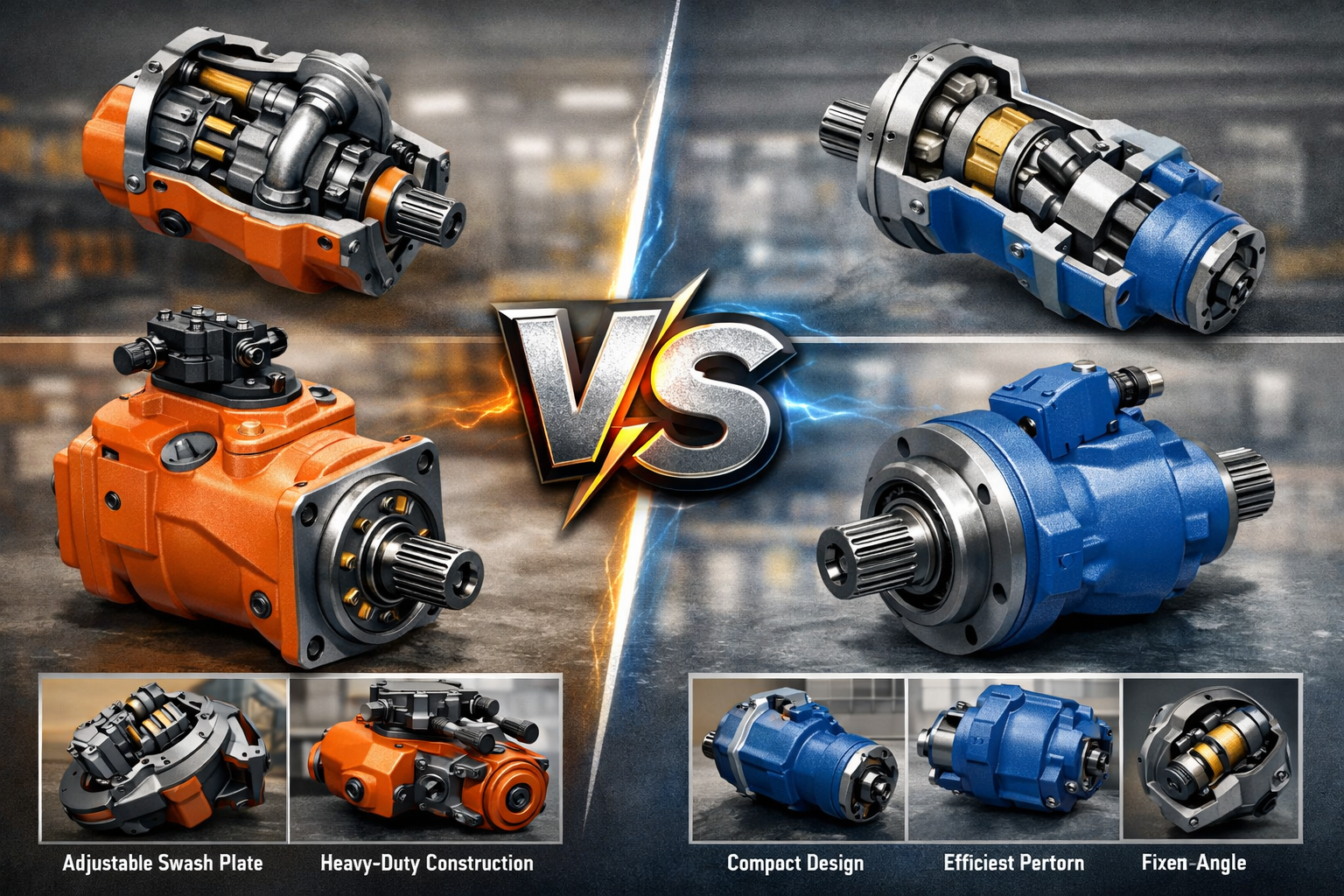
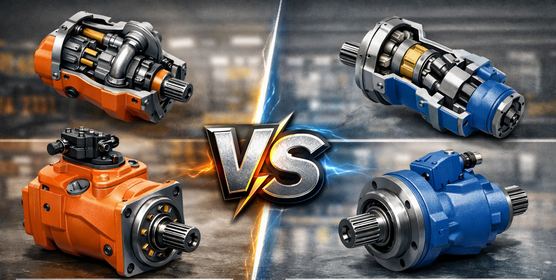
4. A6VM vs A2FM: Detailed Comparison
| Parameter | A6VM (Variable) | A2FM (Fixed) |
|---|---|---|
| Displacement | Variable | Fixed |
| Control | Advanced (hydraulic/electric) | Minimal |
| Efficiency | High (adaptive) | High (constant) |
| Cost | Higher | Lower |
| Complexity | High | Low |
| Flexibility | Very high | Limited |
| Maintenance | Moderate | Low |
| Best Use | Variable load systems | Constant load systems |
5. Technical Performance Factors
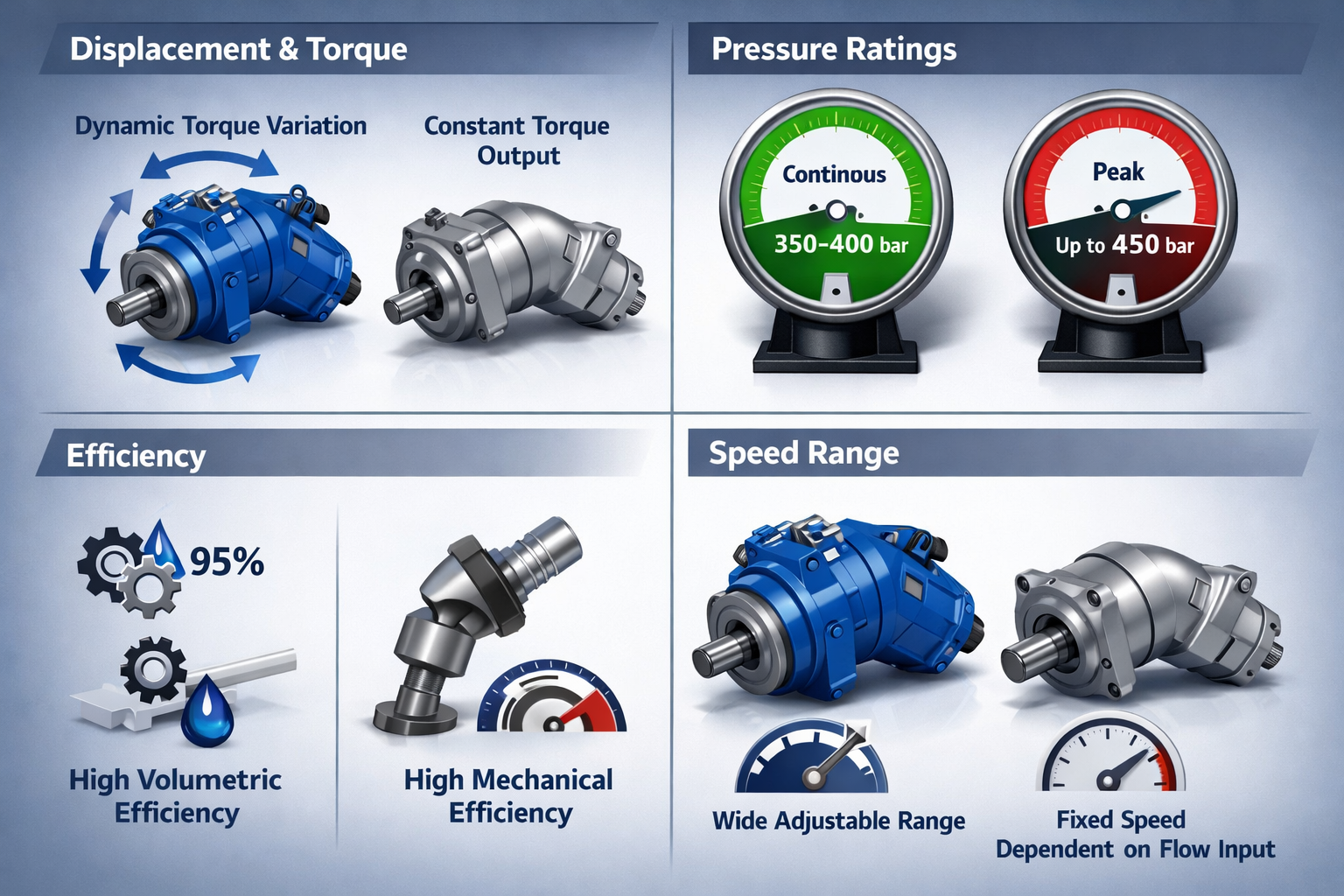
5.1 Displacement and Torque
- Torque ∝ displacement
- A6VM allows torque variation dynamically
- A2FM provides constant torque output per input flow
5.2 Pressure Ratings
- Both motors typically operate:
- Continuous: ~350–400 bar
- Peak: up to ~450 bar
5.3 Efficiency
- Volumetric efficiency: ~95% (approx., condition-dependent)
- Mechanical efficiency: high due to bent-axis design
5.4 Speed Range
- A6VM: Wide adjustable range
- A2FM: Fixed, dependent on flow input
6. Application-Based Selection
Choose A6VM if:
- Variable speed/torque is required
- System uses hydrostatic transmission
- Energy optimization is critical
- Load conditions change frequently
Choose A2FM if:
- Constant operation is required
- Budget constraints exist
- System simplicity is preferred
- Maintenance access is limited
7. Integration in Hydraulic Systems
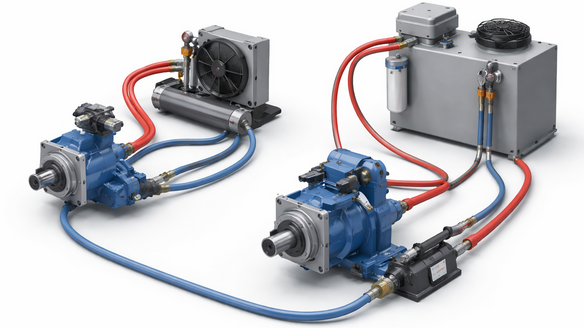
Both motors integrate into:
Closed Circuit Systems
- Common in mobile machinery
- Direct pump-motor loop
- High efficiency
Open Circuit Systems
- Industrial setups
- Requires return lines and reservoirs
8. Common Issues and Maintenance
Typical Problems
- Seal leakage
- Contamination in hydraulic fluid
- Pressure drops
- Noise or vibration
Preventive Measures
- Regular filtration checks
- Use of recommended hydraulic oil
- Monitoring pressure and temperature
- Periodic inspection of seals and bearings
9. Industry Use Cases
Construction Equipment
- Excavators → A6VM preferred for variable control
- Loaders → both types depending on system
Mining
- Heavy-duty drives → A6VM for adaptability
Industrial Automation
- Conveyor systems → A2FM for reliability
Marine Applications
- Winches and propulsion → A2FM dominant
Conclusion
The Rexroth A6VM hydraulic motor is a high-performance, variable displacement solution designed for demanding industrial and mobile applications. Its ability to dynamically adjust torque and speed makes it significantly more versatile than fixed displacement motors.Agar aap Rexroth Hydromatik Motors kharidna chahte hain, to A6VM aur A2FM ke features ko compare karke apni requirement ke hisab se choose karein.
Final Technical Summary
- Variable displacement → adaptive performance
- High efficiency → reduced energy loss
- Wide speed range → precise control
- High pressure capability → heavy-duty applications
✔ Best suited for:
- Complex systems
- Variable load conditions
- High-performance requirements